Busted Plow
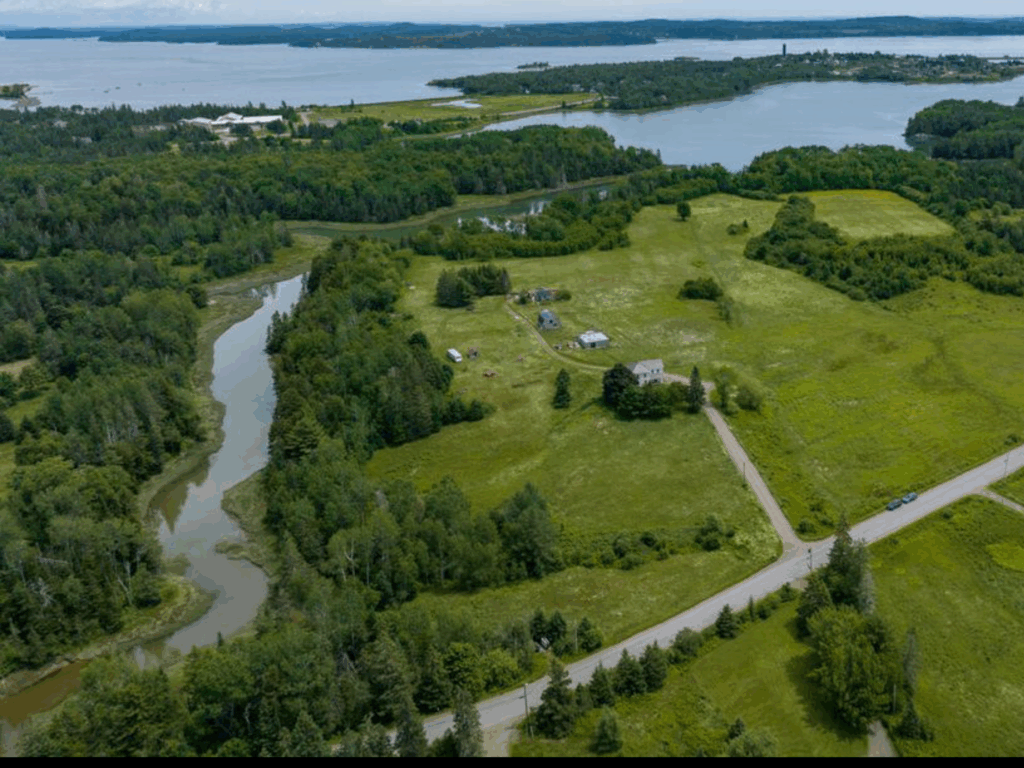
Busted Plow is a 20-acre homestead on the rugged shoreline of Cobscook Bay in far eastern coastal Maine—Way Downeast. Here, salt marsh meets mixed forest, old farm fields, and tidal pools teeming with life. The land holds echoes of its past as a working farm, but its future is rooted in regeneration.
A Permaculture Preserve
Busted Plow is not a traditional farm, nor is it left to wild abandonment. It’s an evolving permaculture preserve, guided by the principles of observation, integration, and care. The goal is to support native biodiversity while producing sustainable, cruelty-free food for humans and wildlife alike.
This approach means restoring and stewarding the land through minimal disturbance, letting native grasses, wildflowers, and shrubs regenerate across open meadows and woodland edges. It means fostering habitats that benefit pollinators, amphibians, birds, and countless small creatures that call this place home. Management decisions are shaped by what already wants to grow here, by what supports the bees, the frogs, the birds, and the unseen microbial life in the soil.
In Partnership with the Land
Land is not shaped to fit human agendas — instead, patterns in soil, plant life, and wildlife movement are observed and honored. Natural succession and native tendencies set the course.
Respect for All Living Things
The guiding ethic at Busted Plow is veganism as land care. That means no animal exploitation, no hunting, and no input from livestock. Plants are gathered in ways that leave the rest thriving. The aim is to live in reciprocity with the land.
Rooted in Permanence
Food-bearing trees, shrubs, and perennials form the backbone of a system that supports wildlife, improves soil health, and offer sustainable yields—embodying the permaculture principle of creating lasting, resilient abundance.
Low-Impact, High-Integrity
Management avoids machinery, tilling, and chemicals. No synthetic fertilizers, pesticides, or herbicides are used—only hand tools, mulch, and seasonal timing to support regeneration with minimal disturbance.
Diversity is Resilience
No monocultures, no tidy rows. A thriving system is messy, multilayered, and abundant in form and function. Biodiversity is the foundation of health, beauty, and adaptation.
Whole-System Thinking
Each habitat—meadow, forest, wetland, and shore—contributes to a connected whole. Edges are valued, and natural cycles of water, nutrients, and energy are respected and reinforced.
A Living Landscape
Busted Plow is a mosaic of habitats—shoreline, woods, meadow, and wetland—each supporting its own web of life.
Care for these habitats extends beyond plants and soil. Clean air, pure water, dark skies, and quiet surroundings are essential to well-being for both people and wildlife. Every effort is made to reduce pollution, conserve resources, and protect the natural sensory landscape.
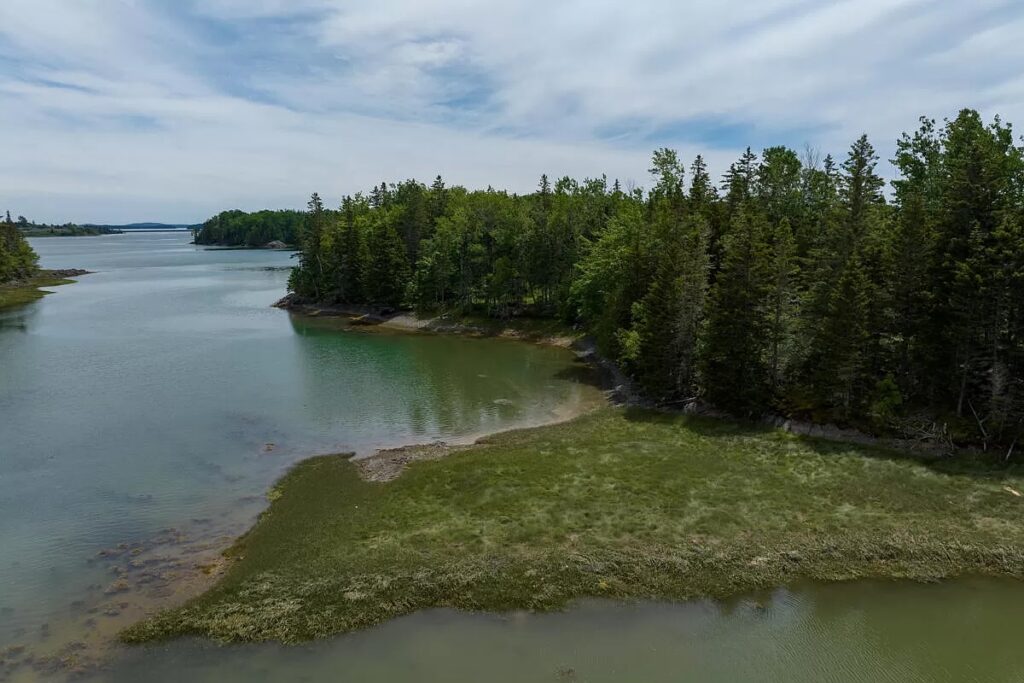
Shoreline
Intertidal salt marshes, where brackish waters nurture rockweed and marine life.
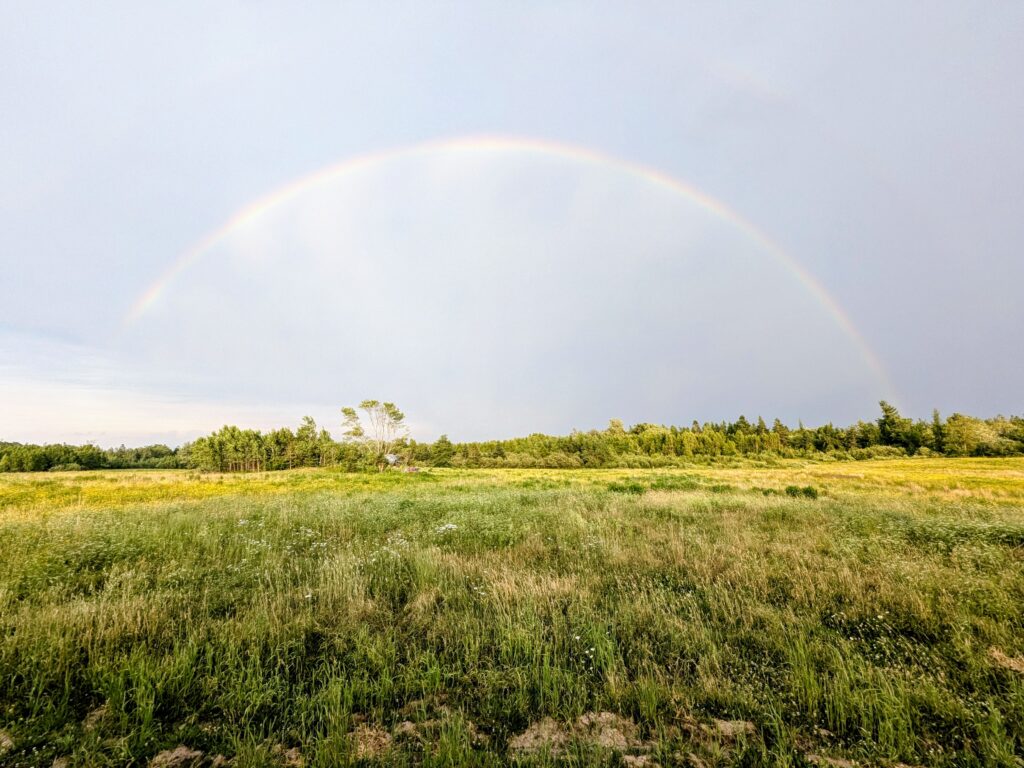
Meadows
Old farm fields, now home to goldenrod, asters, wild roses, and a rising diversity of native flowers and grasses
Woods
Mixed woodlands, rich with the songs of warblers and the footfalls of porcupines.
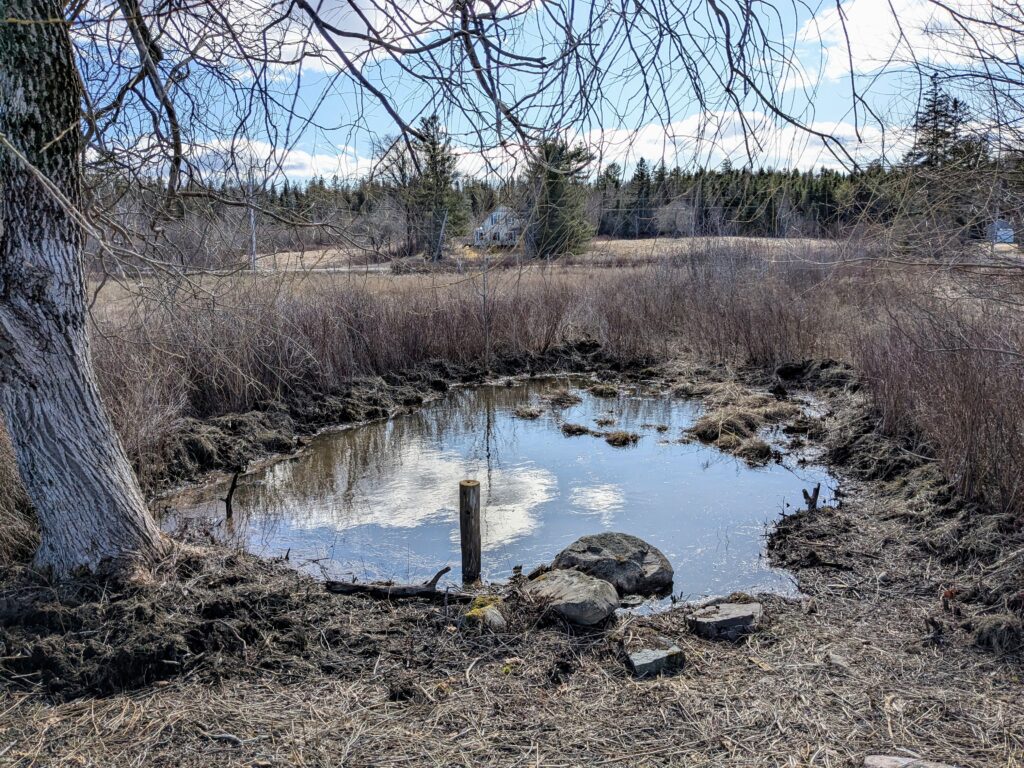
Wetlands
Ephemeral streams and shallow ponds, carefully stewarded to invite amphibians, birds and dragonflies.
Busted Plow is an evolving permaculture preserve, guided by the principles of observation, integration, and care.
What’s Taken Root: The First Year and a Half
Established in the spring of 2024, Busted Plow reflects a series of deliberate beginnings rather than finished outcomes. The first year and a half has been devoted primarily to observation—learning the land, its seasonal rhythms, and the plants, animals and fungi that already call it home—while introducing light infrastructure to support food production and ecological health.
With two full growing seasons now complete, along with two cycles of spring and fall bird migration and breeding, early patterns are beginning to emerge. The passage of time enables a shift toward tracking the evolving landscape, with the aim of understanding ecosystem health and biodiversity. Throughout this work, one philosophy has remained constant: grow what belongs, observe what thrives, and share the work with all living things.
At the Threshold
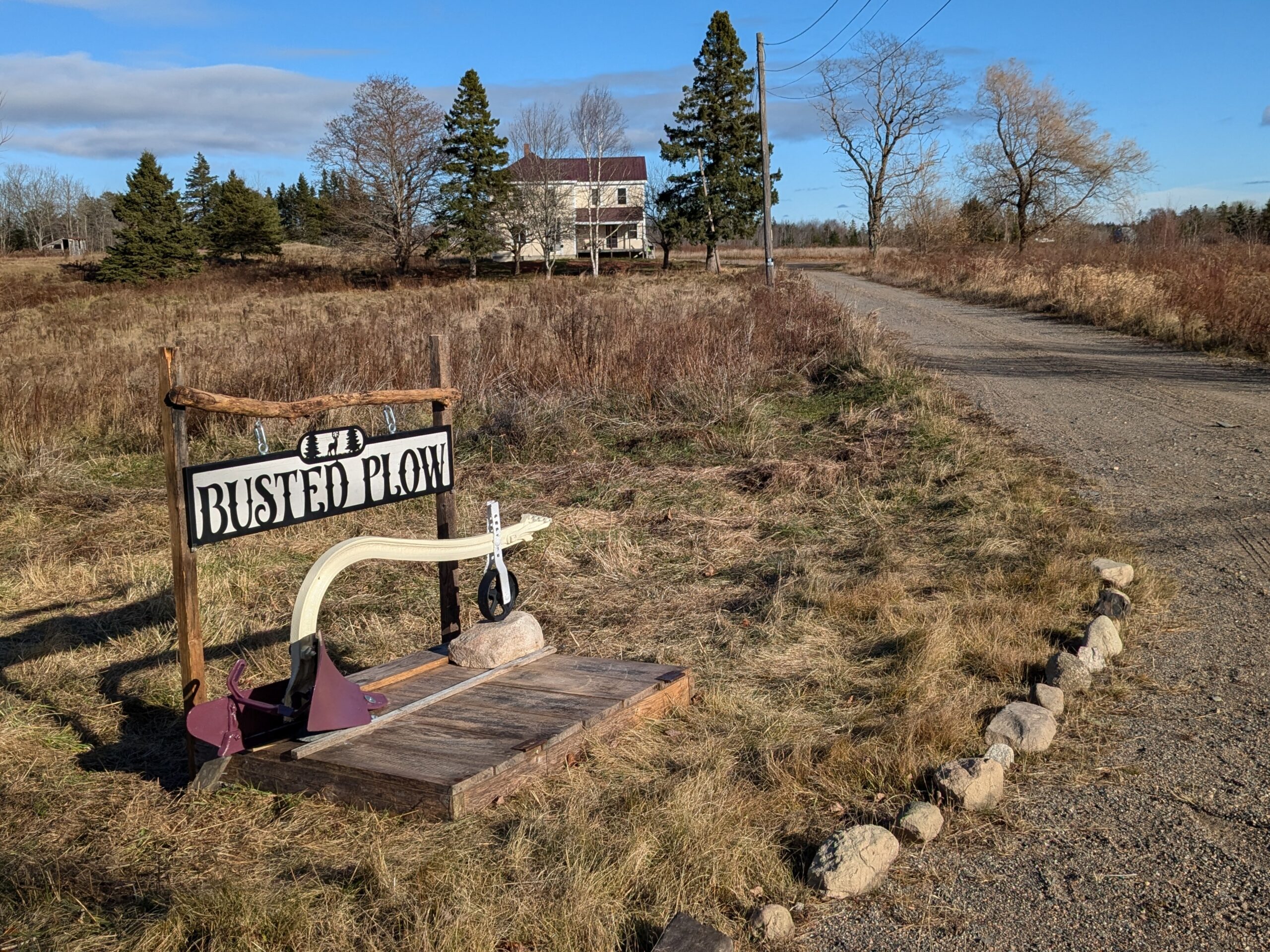
The name Busted Plow emerged early, informed by both permaculture philosophy and the discovery of an antique plow near one of the outbuildings. Broken, rusted, and long out of use, the plow serves as a quiet reminder of a history rooted in repeated disturbance. Its condition suggests an ending as much as an origin point—a shift away from breaking ground and toward learning how it responds when left intact.
The entry to Busted Plow was shaped to reflect the intention of the property. A small area at the edge of the driveway is hand-mowed using a scythe, and has a newly placed mailbox. Near the sign, a tulip poplar sapling was planted as an initial experiment in assisted migration. While not native to this immediate region, tulip poplar is native farther south and increasingly considered a candidate for northward movement as climate conditions change.


Leaving Lawn Behind
Encircled by trees and partially sheltered from wind, what was once a conventional yard west of the house is now a clearing that functions as a meeting place between meadow, wildlife and human presence.
Large sections of existing lawn were replaced with beds of native and beneficial plants, shifting the emphasis from uniform groundcover to layered habitat. What lawn remains has been left largely wild to support insects and other invertebrates, with periodic scything to promote visibility and maintain a height that benefits ground-feeding birds and small mammals.
At the center of this space, a bird feeding area was established. The clearing has since become a regular gathering place for birds, along with red squirrels, gray squirrels, and chipmunks, whose movements and interactions add liveliness.


Harvest House
One of the existing outbuildings was adapted to support seasonal harvest and preservation activities. Deteriorating chipboard siding was removed and a new roof was installed to support water catchment, directing rainfall into a cistern housed within the building. Around the perimeter of the structure, grape vines were planted that will provide a living wall and food within a few years. Bird nesting boxes were added to posts nearby, which were enthusiastically inhabited by tree swallows immediately after their installation.
Inside, the space is used for processing foraged plants gathered from around the property. Bundles of leaves, flowers, roots and stems are hung from the rafters to air dry slowly, forming the basis of a homemade wild herbal tea blend that is delicious cold in the summer and hot on chilly winter days.


The Apple Loop
A narrow trail was established to link meadow and woods in a continuous circuit, winding past existing wild edible plants identified during early exploration of the property: apple trees, raspberry and blueberry patches, and choke cherry shrubs. The trail functions as a birding route while also providing foraging access.
Over time the Apple Loop has become a wildlife corridor used by a range of animals. To better understand how the trail is used beyond daylight hours, trail cameras were installed at select locations along the loop.
Maintenance of the Apple Loop is carried out entirely by hand. Meadow sections are cut with a scythe, while wooded stretches are kept open using a hand axe and loppers. This approach limits disturbance, avoids compaction, and keeps the trail narrow enough to remain integrated into the surrounding habitat.


Kitchen Garden
A kitchen garden was established on the site of a former pole barn that burned shortly before the property changed hands. Before planting began, the soil across the site was tested and debris was removed. The upper layer of soil was gently turned to blend in residual ash. Mulch was added to stabilize the surface and support gradual recovery of unplanted areas.
The garden was developed with an emphasis on organic food production and increasing self-sufficiency. A mix of familiar annual crops was planted alongside early experiments with perennial edibles. Lambsquarters emerged early as a vigorous volunteer. A hardy annual well adapted to disturbed soils, it extended the harvest beyond what had been planned. Its self-seeding habit and nutritional value reframed the idea of productivity, offering food with minimal effort and reinforcing the importance of observation in shaping what is grown.


Stewardship Across the Land
Along the shoreline, single-track footpaths provide access without altering the structure of the intertidal zone. No motorized vehicles, fishing, or other harvesting of living things disturb the area. Dead rockweed washed up by the tides is gathered for use as mulch.
Meadows have been allowed grow naturally, with no mowing or chemical inputs. Areas intended to remain open meadow have been blocked out, while adjacent edges have been designated for expansion of shrubby habitat.
At the woodland margins, edges are being gradually feathered to soften transitions and reduce dominance by fast-growing aspens. Elsewhere, areas have been identified where the forest will be allowed to fill in. Trails concentrate foot traffic along designated routes and limit broader disturbance.
Initial wetland stewardship has focused on recognizing and monitoring existing hydrology. Near the house, a small seasonal wetland that had become clogged with accumulated organic debris was cleared to restore surface water.


Planting the Future
Plans for Busted Plow continue to take root. Future additions will expand both the food-producing potential and the ecological richness of the land. These projects will be grounded in the same core philosophy: grow what belongs, observe what thrives, and share the work with all living things.
Native Nut Orchard
Cold-hardy nut trees and shrubs will offer long-term sustenance for humans and wildlife alike, building soil health and adding vertical diversity to the landscape.
Fruit and Berry Orchard
Native fruiting shrubs and trees will support pollinators, birds, and seasonal foraging, enriching the land’s cycles of bloom and renewal.
Greenhouse Conversion
The existing Quonset hut will be transformed into a greenhouse for perennial propagation, early-season seed starting, and long-term support of the garden ecosystem.